Inside Light Pole Manufacturing: The Difference Between Aluminium and Steel

To the average pedestrian, a street light is simply part of the background scenery. It holds a lamp, it lights the footpath, and it disappears into the urban landscape.

But for a civil engineer, a council asset manager, or an urban designer, a Street light pole is a significant structural asset. It is an investment that needs to stand upright against cyclonic winds, resist corrosive salt spray, and house increasingly complex electrical systems for 25 years or more.

For decades, galvanised steel has been the default choice for infrastructure. However, advances in Street light pole manufacturing have shifted the goalposts. Today, extruded aluminium offers a superior alternative that addresses the biggest pain points of steel: rust, weight, and lack of versatility.

In this deep dive, we explore the engineering differences between these two materials and why modern councils are making the switch.

1. The Manufacturing Process: Extrusion vs. Rolling

The fundamental difference lies in how the pole is born.

Steel: The Rolled Method Traditional steel poles usually start as flat sheets of metal. These sheets are rolled into a tapered tube and then welded along the seam. While effective, this process has limitations. The weld line can become a weak point, and the shape is generally limited to simple circles or octagons.

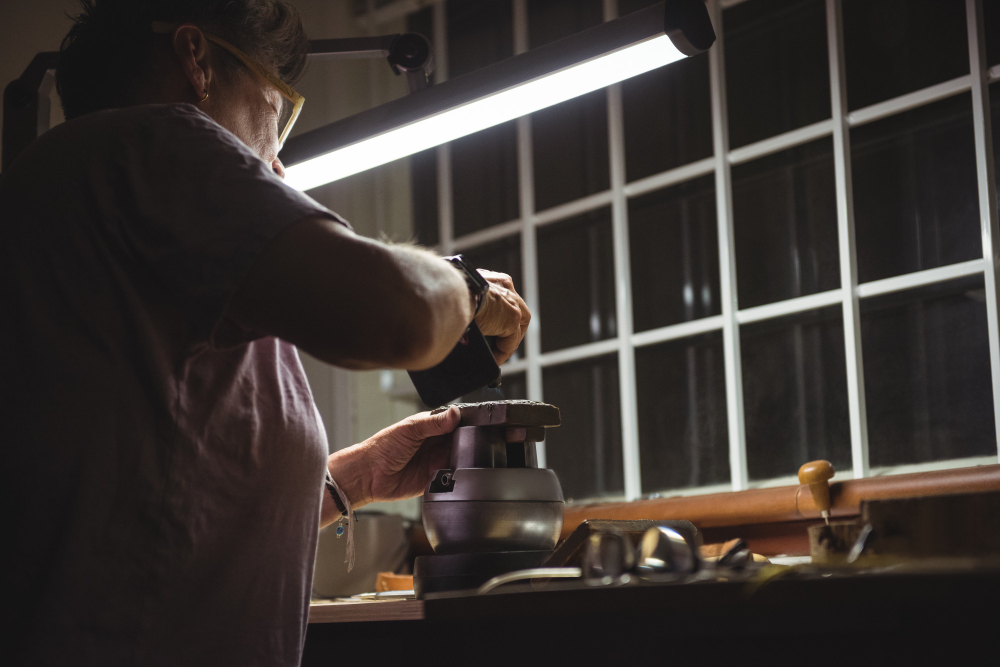
Aluminium: The Extrusion Method At Multipole, we utilise a process called aluminium extrusion. Think of this like squeezing toothpaste from a tube, but with immense pressure and precision. Heated aluminium billets are pushed through a steel die to create a continuous profile.

This allows us to create complex cross-sections—such as our “Multi-Tech” series—that feature internal tracks and separate cavities for wiring. Because the profile is formed in one piece, there are no welded seams along the shaft to weaken over time. This level of intricacy is simply not possible with traditional rolled steel.

See how our Extrusion Technology works.

2. Fighting the Aussie Elements: Corrosion Resistance

Australia is an island nation. With 85% of our population living within 50km of the coast, salt spray is the number one enemy of infrastructure.

The Weakness of Galvanised Steel: Steel relies on a coating to survive. Hot-dip galvanising adds a layer of zinc to protect the steel underneath. It works well—until it doesn’t. If a stone chips the paint, or a delivery truck scratches the surface, the barrier is broken. Rust begins immediately and spreads underneath the coating (known as “cancer”), often undetected until structural failure looms.

The Strength of Aluminium (Alloys 6063 & 6005) At Multipole, we engineer our poles using specific Marine Grade Structural Alloys (6063 & 6005).

Unlike steel, these alloys do not need a coating to survive. When exposed to oxygen, they form a microscopic, hard oxide layer that seals the metal. If the pole is scratched, this oxide layer instantly reforms, effectively “healing” the wound.

This durability is why the global market is shifting. In fact, over 60% of all new Street light poles in Europe are now aluminium—a testament to their superior longevity and lower lifetime cost.

between replacing a rusted steel pole in 7 years versus having an aluminium pole stand strong for 30.

3. Why “Australian Made Street Lights” Reduce Risk

In the current global climate, supply chains are fragile. We have seen how quickly international shipping can grind to a halt.

Relying on imported poles introduces significant risk to construction schedules. If a shipment is delayed at the docks, your entire streetscape project sits idle. Furthermore, quality control can be inconsistent with overseas mass production.

Choosing Australian made street lights mitigates these risks.

  1. Lead Times: Local manufacturing means shorter, more predictable delivery windows.
  2. Spare Parts: Accidents happen. If a driver knocks down a pole in a busy CBD, you cannot wait 12 weeks for a replacement from overseas. A local manufacturer can supply a replacement section in days, restoring safety to the road faster.

4. Weight and Installation Safety (OH&S)

As any Street light pole manufacturer will tell you, the cost of the pole is only half the equation. You also have to pay to install it.

Steel is heavy. Installing a 10-metre steel column often requires a large crane, traffic control to close lanes, and a team of riggers. This adds thousands of dollars to the installation cost and causes major disruption in urban areas.

Aluminium is approximately one-third the weight of steel. A standard aluminium pole can often be lifted by two people or a small hiab truck. This has massive implications for Occupational Health and Safety (OH&S). Lighter loads mean less risk of injury for the installation crew, smaller machinery on-site, and faster installation times.

5. Sustainability: The Green Choice

Sustainability is no longer a “nice to have”—it is a KPI for almost every council tender.

Aluminium is one of the most sustainable materials on the planet. It is infinitely recyclable without losing its properties. In fact, recycling aluminium requires only 5% of the energy needed to produce new aluminium.

Conversely, while steel is recyclable, the energy required to transport heavy steel poles from overseas factories creates a massive carbon footprint. By choosing lightweight, locally extruded poles, you are significantly lowering the “carbon miles” of your project.

Conclusion

When specifying infrastructure, it is easy to copy and paste the specs from the last project. But the technology of Street light pole manufacturing has moved on.

By switching to marine-grade aluminium, you are choosing a material that fights corrosion, protects installation crews, and supports local industry. It is a decision that pays off not just at installation, but for decades to come.

Ready to upgrade your infrastructure specifications? Contact Multipole today to discuss our range of extruded aluminium solutions.
 

How to Choose Reliable Street Light Pole Suppliers in Australia: A Developer’s Guide

When planning a new urban development, highway upgrade, or public park, lighting often feels like a box-ticking exercise. However, the hardware you choose—specifically the poles themselves—plays a critical role in the long-term safety, aesthetics, and budget of your project.

Choosing between the many street light pole suppliers in Australia can be difficult. With a market flooded with generic imports and new companies popping up overnight, how do you ensure the partner you choose has the longevity to support you?

Whether you are a council planner, a civil engineer, or a landscape architect, selecting the right manufacturing partner is about more than just price—it is about risk management. Here is a guide to identifying reliable suppliers who can meet the unique demands of the Australian landscape.

1. Strict Adherence to Australian Standards Lighting

Australia has some of the harshest environmental conditions on earth. From the cyclonic winds of the north to the blistering UV exposure in the centre, “standard” poles often fail to make the grade.

A reputable supplier must be able to prove compliance with Australian standards lighting codes, specifically AS/NZS 1158 (Lighting for Roads and Public Spaces). This standard is not just a suggestion; it is a critical benchmark that dictates everything from the structural integrity of the pole to how it handles wind loading.

The Risk: Many overseas imports are designed for milder climates. When installed in Australian coastal regions, they may not withstand the specific wind shear factors required by local councils. Always ask your supplier for their specific wind loading data sheets before signing a contract. If they cannot provide data for Australian terrain categories, look elsewhere.

2. Material Quality: Why Marine Grade Aluminium Wins

If your project is anywhere near the coast—which, in Australia, is where 85% of us live—salt spray is your enemy.

Traditionally, galvanised steel has been the default choice for light pole manufacturers. While steel is strong, it is prone to rust if the protective coating is scratched or degrades over time. Once rust sets in, maintenance costs skyrocket, and the structural integrity of the pole is compromised.

At Multipole, we advocate for Marine Grade Aluminium (Series 6000). Unlike steel, aluminium forms a natural oxide layer that prevents corrosion, even in high-salt environments. It is lighter, easier to install, and lasts significantly longer with near-zero maintenance.

Learn more about our Marine Grade Aluminium advantages.

3. Supply Chain Security: The “Local” Advantage

In the construction industry, lead times can make or break a project schedule.

One of the hidden risks of relying on street light pole suppliers who import their stock is the unpredictability of international shipping. A delay at a foreign port can leave your streetscape unfinished for months, holding up handover and payment.

Choosing a supplier with local Australian manufacturing capabilities mitigates this risk. When the product is extruded, assembled, and finished locally, lead times are shorter and more predictable. Furthermore, if a pole is damaged by a vehicle accident years down the track, sourcing a replacement part locally is days away, rather than weeks of waiting for an international shipment.

4. Manufacturing Flexibility: The Estate & 300 Series

No two projects are the same. A heritage precinct requires a completely different aesthetic to a modern housing estate.

Avoid suppliers who only offer “off-the-shelf” solutions. A true light pole manufacturer should offer modular systems that allow you to customise height, colour, and accessories.

Proven Solutions:

  • The Estate Series: Specifically designed for residential subdivisions and parks, offering a sleek aesthetic that blends into the suburb while maintaining strict council compliance.
  • The Multipole 300 Series: The robust workhorse for major roads and highways, engineered to handle heavier loads and higher wind speeds while delivering exceptional durability.

This flexibility ensures that the lighting infrastructure enhances the urban design rather than detracting from it.

5. Future-Proofing: Multipole Smart Pole Integration

We are moving rapidly towards a connected future. Councils are increasingly looking for infrastructure that can double as digital assets. This is where the concept of Multipole smart pole integration comes into play.

When selecting a supplier, ask yourself: Can this pole hold more than just a light?

Reliable suppliers are now designing poles with internal tracks and cavities that can house:

  • 5G Small Cells: Hiding telecommunications gear inside the pole.
  • CCTV Security: Integrating cameras for public safety.
  • IoT Sensors: Monitoring air quality or traffic flow.

Even if your current budget doesn’t allow for smart sensors, installing “smart-ready” poles now saves expensive retrofitting costs down the line. It turns a sunk cost into a future asset.

Explore our Multipole Smart Pole solutions now.

6. Proven Track Record: 45 Years in Business

Finally, nothing speaks louder than history. A trustworthy supplier should be able to point to poles standing in Australian streets that have weathered the elements for decades.

At Multipole, we are proud to be celebrating 45 years in business. While many street light pole suppliers come and go, our longevity is your guarantee. Our history of innovation runs deep—in fact, we designed and manufactured the original Multipole Smart Pole for the City of Sydney ahead of the 2000 Olympics, setting the standard for urban infrastructure decades ago.

 We understand the specific challenges of the Australian climate because we have been manufacturing here for nearly half a century.

Before you decide on a partner, ask: Will this supplier still be around in 10 years to provide spare parts?

A supplier with a 45-year history of successful Australian projects offers peace of mind that a new importer simply cannot match.

View our recent Australian projects.

Conclusion

The cheapest option on the spreadsheet is rarely the cheapest option over the life of the asset. By focusing on Australian standards lighting, superior materials, and a partner with 45 years of experience, you ensure your project delivers value for decades.

Are you looking for trusted street light pole suppliers in Australia? Contact the Multipole team today to discuss whether the Estate Series or 300 Series is right for your next project.

Contact Multipole Today.